
Education for Sustainable Living Program A Modern Approach to Environmental Action
The Education for Sustainable Living Program represents a transformative approach to environmental education that empowers students to become active participants in addressing climate challenges. Unlike traditional environmental programs that focus primarily on awareness, ESLP emphasizes experiential learning, community engagement, and practical action. By providing students with tools, resources, and supportive frameworks, the program helps young people develop both the knowledge and confidence needed to create meaningful environmental change in their communities and beyond.
Core Components of Effective Environmental Education
Successful sustainability programs integrate multiple educational approaches that work together to create transformative learning experiences. These components ensure that students develop comprehensive understanding while building practical skills they can apply immediately.
- Experiential learning through hands-on projects provides students with direct experience solving real environmental challenges in their communities
- Systems thinking helps students understand interconnections between environmental, social, and economic factors affecting sustainability
- Community partnerships create networks of support that amplify student efforts and provide access to resources and expertise
- Leadership development builds confidence and organizational capacity through peer education and project management opportunities
- Impact assessment teaches students to measure outcomes and demonstrate the effectiveness of their environmental initiatives
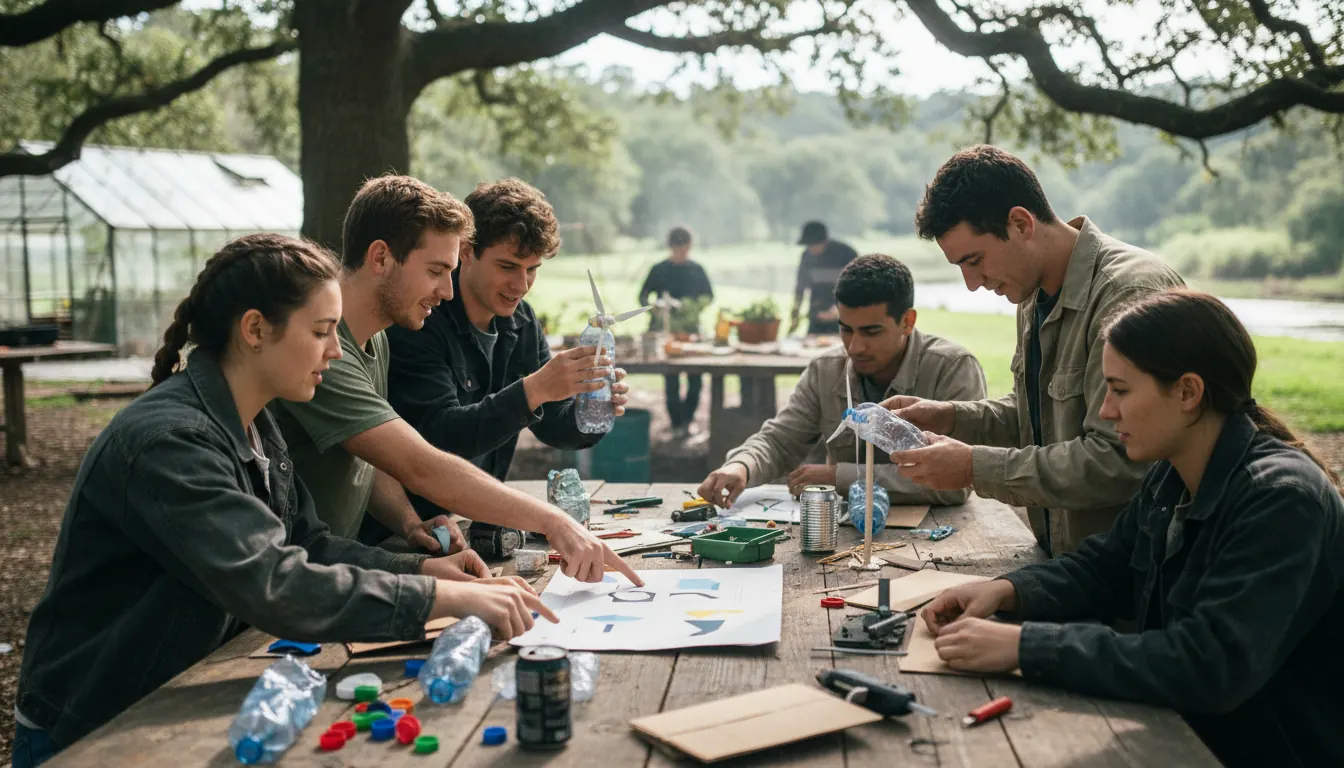
Student-Led Initiatives Across Different Contexts
Environmental education principles apply across diverse settings, from campus sustainability projects to corporate environmental management. The table below demonstrates how core concepts translate into different operational contexts.
| Context | Key Focus Areas | Measurable Outcomes |
|---|---|---|
| Campus Programs | Energy audits, composting, waste reduction, student advocacy | Carbon emissions reduced, waste diverted, policy changes implemented |
| Entertainment Venues | LED lighting, HVAC efficiency, water reclamation, sustainable sourcing | Energy consumption decreased, water usage optimized, waste management improved |
| Community Initiatives | Local partnerships, education campaigns, green spaces, transportation | Community engagement increased, sustainable practices adopted, awareness elevated |
"The most powerful environmental education happens when we trust young people to lead, provide them with tools and support, and step back to let them discover their own capacity for creating change."
Building Hope Through Action
ESLP demonstrates that effective environmental education balances acknowledgment of climate challenges with cultivation of hope and agency. By focusing on tangible projects with measurable outcomes, students witness their capacity to effect change and develop resilience needed for long-term environmental advocacy. This approach transforms abstract concern into concrete action while building communities of support that sustain commitment beyond individual projects.